



Planning a trip has a good part and a tedious part, and the tedious part is most of it. Twenty tabs open: one for airfare, three for hotels, a map to check whether that museum is anywhere near the neighborhood you were going to sleep in, a spreadsheet to add it all up and find out you blew the budget. In the end, what decides the trip isn't what you wanted — it's which tab you had the patience to finish reading.
With César, that becomes one sentence:
Build me a 5-night trip to Lisbon in October, out of Boston, around 6 thousand for two.
And that's it: he builds the whole trip, day by day. Not a list of links — an itinerary, with the outbound flight, where to sleep, what to do each day, and what all of it adds up to.
You don't need the dates. Or even the destination.
Two things that stall any planning session, and neither of them stalls César.
Dates can be flexible. "Five nights sometime in October" is a perfectly normal request — and it's the request that saves the most money, because the flight is what decides the days. César looks for the airfare first, finds out that leaving on the 18th costs a hundred dollars less, and only then builds the rest of the trip on top of those days. Lodging and activities are born already fitted to the flight that was worth taking.
The destination is optional. "I want to travel in September but I don't know where: a quiet beach, up to 3 thousand, no visa" is a complete request. César researches destinations that fit what you asked, picks one to build on, and keeps the others within reach so you can swap with a sentence.
While he builds it, you watch him build it
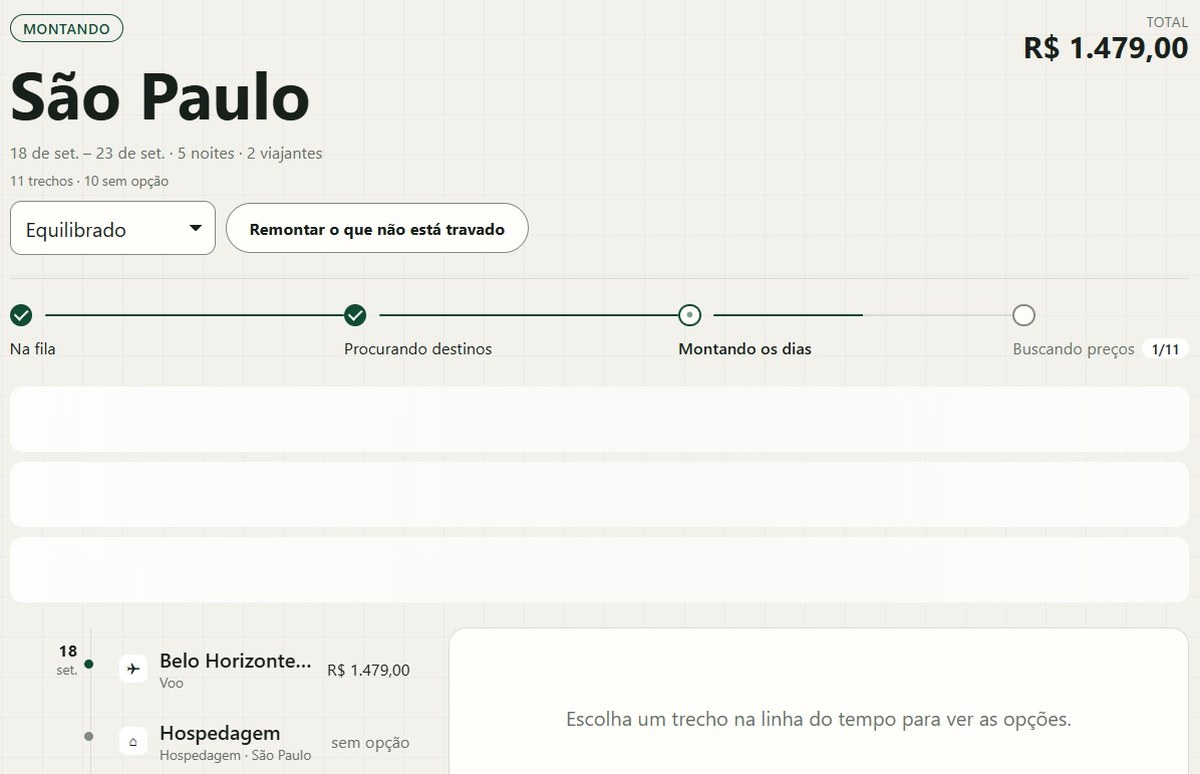
Building an itinerary takes a few minutes — these are real queries to airlines, hotels and activity sources. Instead of an hourglass, César shows what he's doing: queued, finding destinations, building the days, pricing (4 of 15). And the timeline shows up as soon as the first leg exists — in the screenshot below, the outbound flight is already there while the rest is still coming.
Every leg has options — and you swap them by talking
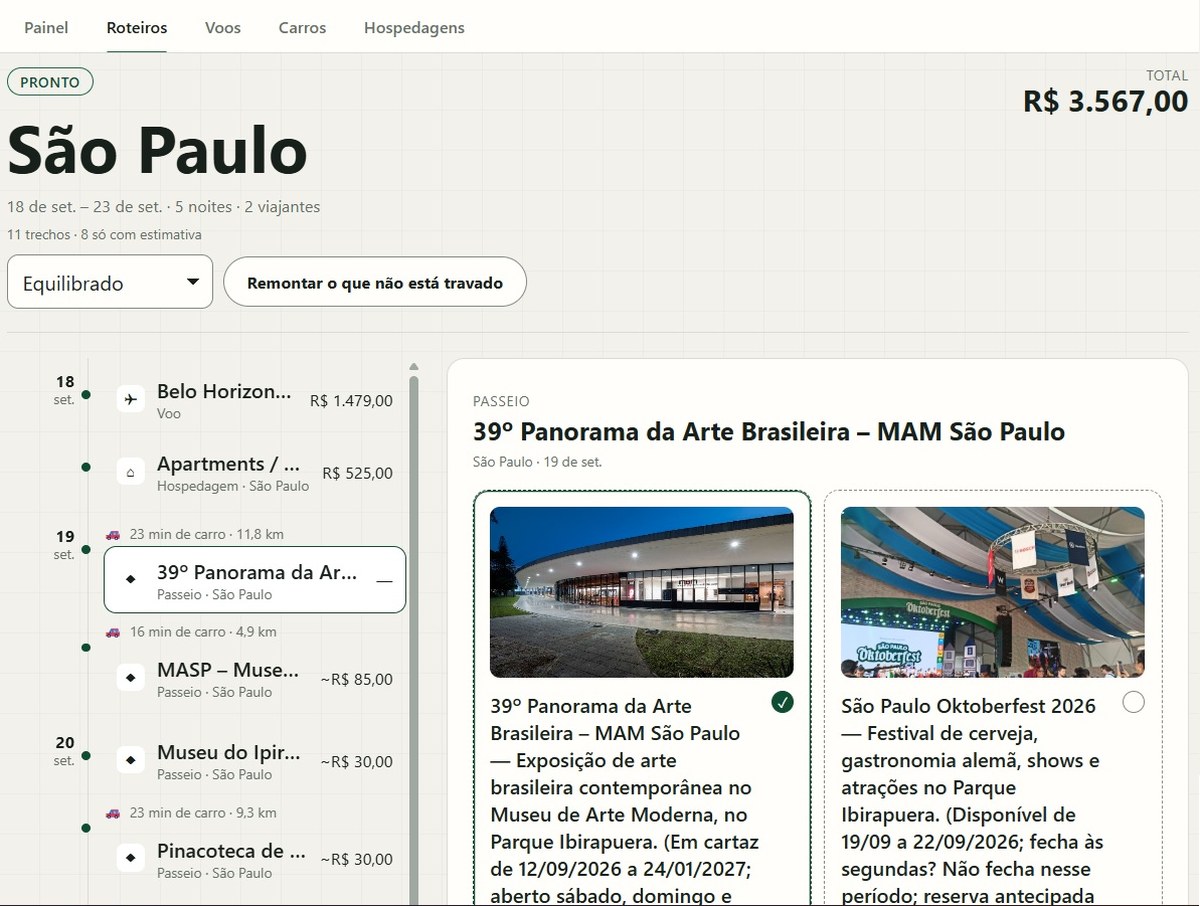
Tap any item on the itinerary and the options for that leg appear: flights with price, duration and stops; hotels with a photo, a rating and the price for the whole stay; activities with a cover image that helps you decide. Choosing is one tap.
Or you don't tap at all: you say what you want changed.
I want that hotel, leave it alone. Just change the flight home.
Make this itinerary cheaper, even if it takes longer to get there.
Drop the Sunday tour and put a free day there.
The second one is what surprises people testing it: one sentence reorders the entire itinerary. "Cheaper even if slower" and "faster even if pricier" are two different trips from the same ingredients, and switching between them doesn't cost a new search — César already has the options, he just changes the criterion he ranks them by. Whatever you locked stays locked.
The detail nobody works out before travelling: getting there
Every itinerary hides a question that only shows up once you're there with your luggage: from the hotel to this place, how do I actually get there?
César answers it in advance. Between one stop and the next on the same day, the itinerary shows the distance and the time — "27 min by car · 12.8 km" — and, when it's walkable, it says so too, with the car as the alternative. It's the kind of thing that changes which hotel you pick, once you see that the three places you wanted are on the other side of town.
The same measurement avoids a common piece of nonsense: when the destination is too close, the itinerary is born with no flight at all. A two-hour drive doesn't get airfare in the conversation; it gets the road, with the distance and the bus options. Once you add getting to the airport two hours early, checking bags, flying and getting out the other side, a 120-mile flight costs more time than driving — and far more money.
What César does not do (on purpose)
He doesn't buy, book or pay. At the end, he hands you the link where you complete the purchase, signed in to your own account, with the airline, flight number and time spelled out so you recognize it when you get there.
And he says plainly where each price came from. An option that came from a real fare query shows the price and the buy button; an option he read somewhere is labeled an estimate, and an estimate never becomes a buy button. A beautiful itinerary with an invented price is worse than no itinerary — you only find out at checkout.
Once the trip is booked, what you bought lives in César's travel book, next to the flights and stays he finds on his own in your email — boarding pass at hand, and an alert when the flight is delayed.
Where this happens
In the chat, where you already talk to César — including on WhatsApp — and on the Travel screen, which is where a seven-day itinerary with four modes of transport and twenty options finally fits. Both entrances change the same itinerary: ask on your phone on the bus, open it on your computer at home, pick up where you left off.
It's the same idea behind the rest of César: software you operate by talking, not one more form to fill in.